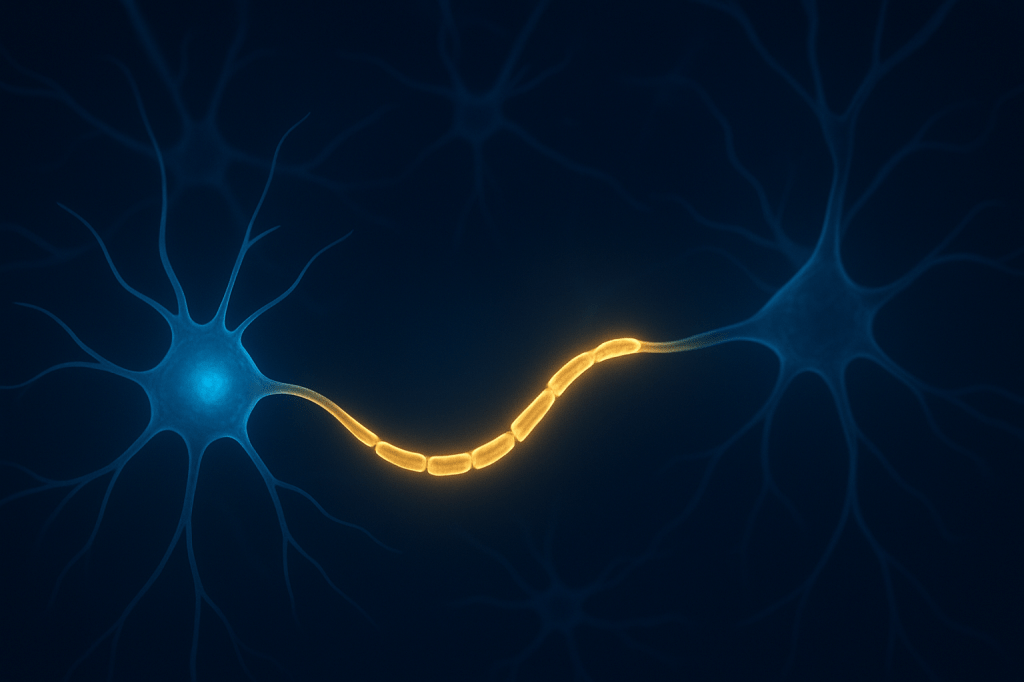
My brain is in the process of healing and repurposing. For years, people believed that once the brain was damaged, that was that — a closed door, a full stop. But the truth, as we now know, is much more hopeful. The brain has a quiet talent for repair. Through neurogenesis (growing new nerve cells) and neuroplasticity (forming new connections), it can rewire itself — not perfectly, but well enough to find new ways of doing old things.
After something like brain surgery or a stroke, this means recovery isn’t simply about waiting. The brain is busy listening, watching, and learning from whatever we do. Every attempt — whether it’s trying to take an even step or coaxing a stubborn hand into movement — sends a message. But beware the catch …
The Catch
But here’s the catch: the brain learns whatever it’s taught, and it doesn’t judge whether that learning is good or bad. If we limp or compensate with the stronger side for too long, the brain will faithfully learn that pattern. Those shortcuts become the new normal. In a way, we can teach ourselves into a corner.
That’s why conscious effort matters so much. Gentle repetition in the right direction — even when it feels slow or awkward — helps shape stronger, healthier pathways. Each small success, however modest, tells the brain, “This is how we want things to be.”
Neurogenesis gives us the raw material for recovery. Our practice and persistence give it purpose. The challenge is to make sure we’re teaching the brain the right lessons.
This TED TALK help me understand neurogenesis. It’s 10 years old, and things must have moved on since then, but I believe this is a very accessible explanation of new understanding … https://youtu.be/B_tjKYvEziI?si=EizuKyj51ZqfWu5D


Leave a comment