
Proprioception is the quiet, unnoticed sense that lets us navigate the world without watching our every move. It keeps us balanced, coordinated, and efficient. When it’s impaired, life becomes unexpectedly difficult.
For example, a foot may land at an odd angle without warning. A hand may overshoot a mug or knock into objects. Even walking through a doorway can feel strangely misaligned. These experiences aren’t due to weakness—they’re due to missing or muddled signals from the body to the brain. A common thing for me is that one leg feels longer than the other; I’m not absolutely sure that this is due to poor proprioception, but it seems to me that it could be. 
This challenge affects confidence as much as function. Each action demands more concentration. Fatigue worsens everything. Tasks that used to be automatic must now be monitored visually. The world becomes less predictable.
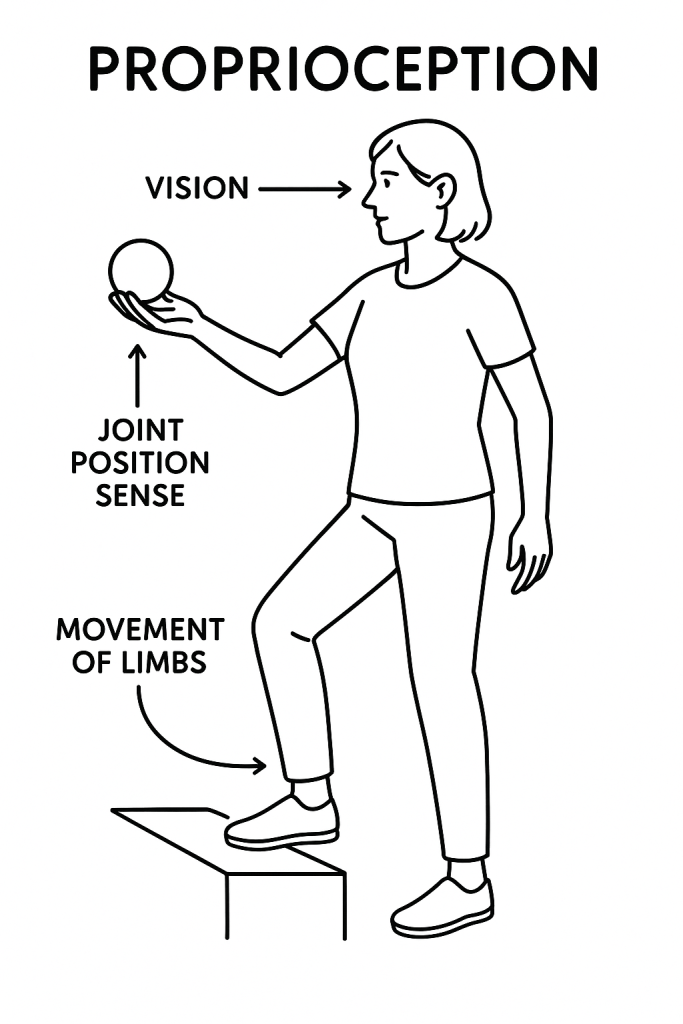
Yet there is hope. The brain can relearn. Through repeated movements, visual cues, and patient practice, the system gradually rebuilds itself. Improvement can be slow, but every small gain—placing a foot accurately, steadying a hand, completing a task without looking—carries enormous significance.
 Half a Mind to ..
Leave a comment