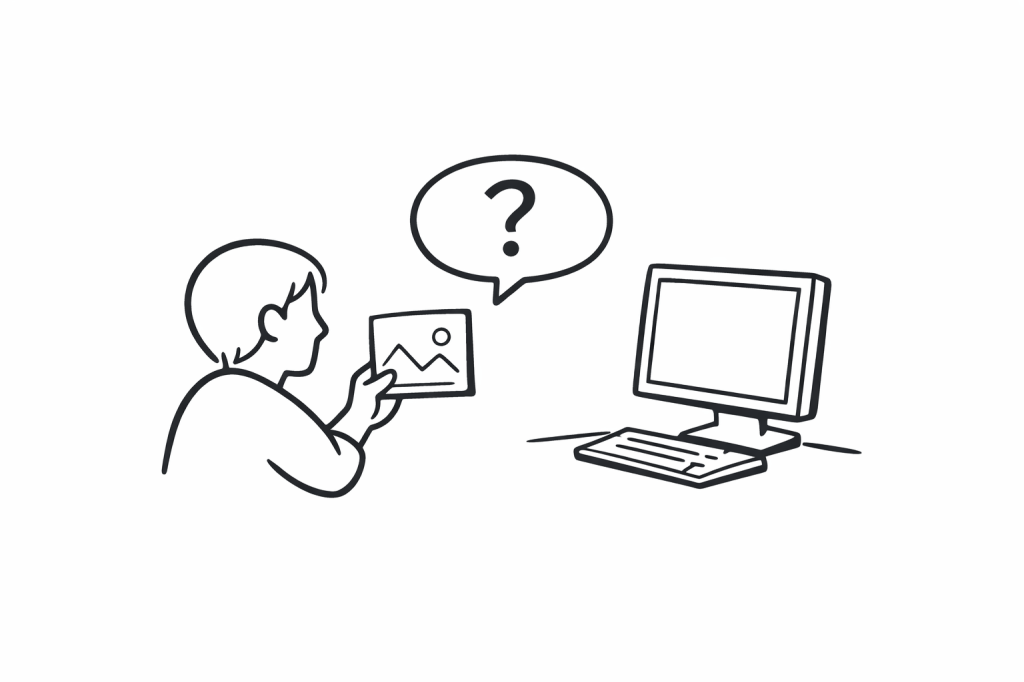
When information comes to you as an image rather than words, maybe in a social media post, it can feel harder to know where to start. One simple approach is to paste the image into an AI tool and type in your questions — what the image shows, what text it contains, and what might reasonably be inferred from it. This can help turn something visual and vague into something more concrete and manageable.
What is both subtle and amazing about this is that the computer isn’t being given a text document to interpret, it’s having to decipher the contents that have been presented as a flat graphic. There’s no real “text“ in the image, it’s our brains that are deciphering what being presented. It’s only very recently that computers can regularly be asked to perform this kind of image interpretation operation with speed, accuracy, and reliable results.
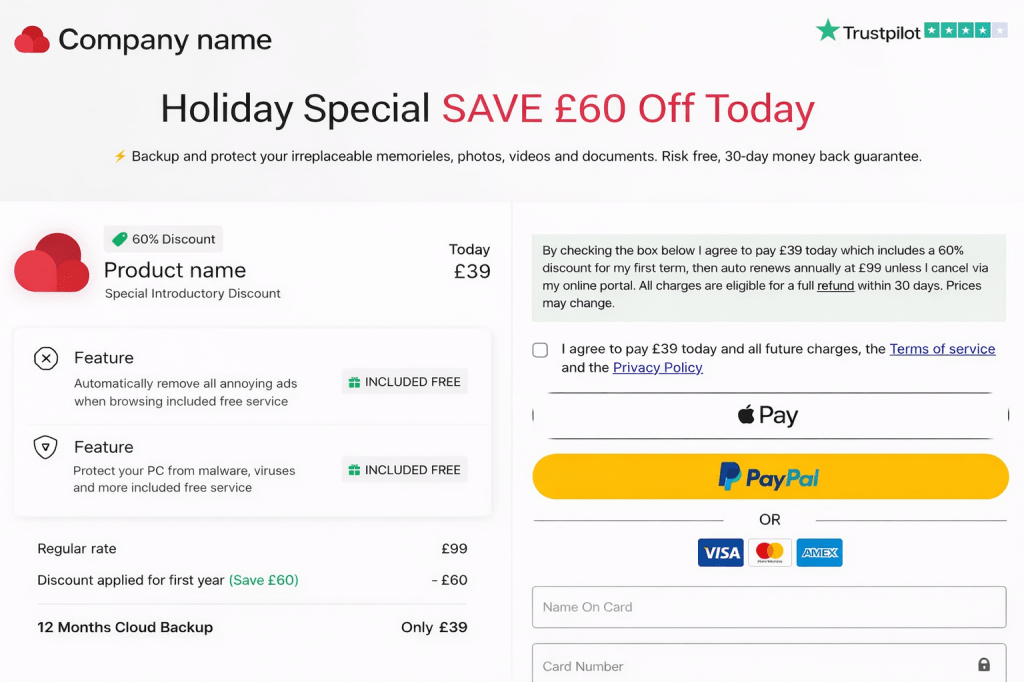
My mum sent me this screenshot of something she was trying to work out whether was genuine or not. I wasn’t quite sure what to tell her. It’s the sort of thing that before my brain injuries I could have handled quite well, but now it’s almost impossible for me to sort without help. I used strategy 150 (see below) to analyse the image and give me an answer. Here’s what it gave me …
You’re right to be wary. I wouldn’t call this an outright scam, but it does show several classic red flags that justify caution.
Here’s a clear, steady way to look at it.
Why your instincts are sensible
1. The headline is doing heavy emotional lifting
“Holiday Special – SAVE £60 Off Today” is designed to rush you. Urgency is a well-worn sales tactic, especially for subscriptions.
2. The real price is hidden in the small print
You’re paying £39 now, but the key line is this:
“then auto renews annually at £99 unless I cancel”
That’s not illegal, but it relies on people forgetting. Many do.
3. Bundled ‘free’ extras you may not want
Adblockers and antivirus software are presented as “included free”, yet:
Windows already has built-in antivirus Modern browsers already block many ads. These extras increase perceived value, not necessarily real value.
4. Trustpilot logos can be misleading
A Trustpilot badge doesn’t mean this offer is good — only that reviews exist. Some companies with aggressive billing still score reasonably well.
It may have – Confusing checkout flows Users not realising they signed up to recurring billing Cancellation being possible, but fiddly
Again: not illegal, but not scrupulous either.
The bottom line (plain English)
❌ Not a fake payment page ❌ Not identity theft ✅ Very likely to cost you £99 next year if you forget ✅ Designed to catch people out rather than serve them well
That’s why it feels like a scam — because it behaves like one, even if it stays just inside the rules.
A safer, traditional alternative
If what you want is simple, dependable backup (and I know reliability matters):
OneDrive (already built into Windows) iCloud (if you use Apple devices) Or a plain external hard drive, plugged in once a week — boring, old-fashioned, and dependable
Often the old ways are still the soundest.
My advice
If you’re hesitating now, don’t proceed. Legitimate, worthwhile services don’t need to rush you or hide the real cost in the margins.
If you’d like, I can:
Help you cancel safely if you’ve already gone part-way Suggest a calmer, clearer backup option that suits how you work Translate any other online “offers” you’re unsure about
You were right to stop and ask. That’s good judgment.
People often think fatigue is just another form of tiredness, but my experience has shown me how different they are. Tiredness is the ordinary, end-of-the-day feeling that settles after a period of effort and usually disappears with a good rest. Fatigue, on the other hand, has been a long-standing companion since my brain tumour treatment in 2008 and again after my stroke. My brain now works much harder behind the scenes to do everyday things — concentrating, navigating, seeing — and that hidden workload drains my energy far more sharply than seems obvious from the outside. Sleep doesn’t always put things right. Fatigue can arrive suddenly, linger stubbornly, and needs managing rather than simply ‘pushing through’. It’s not about attitude; it’s the reality of a brain that’s had to rebuild itself twice.
The Brainstrust charity does a great job on explaining fatigue for people with brain tumours here…
 Half a Mind to ..