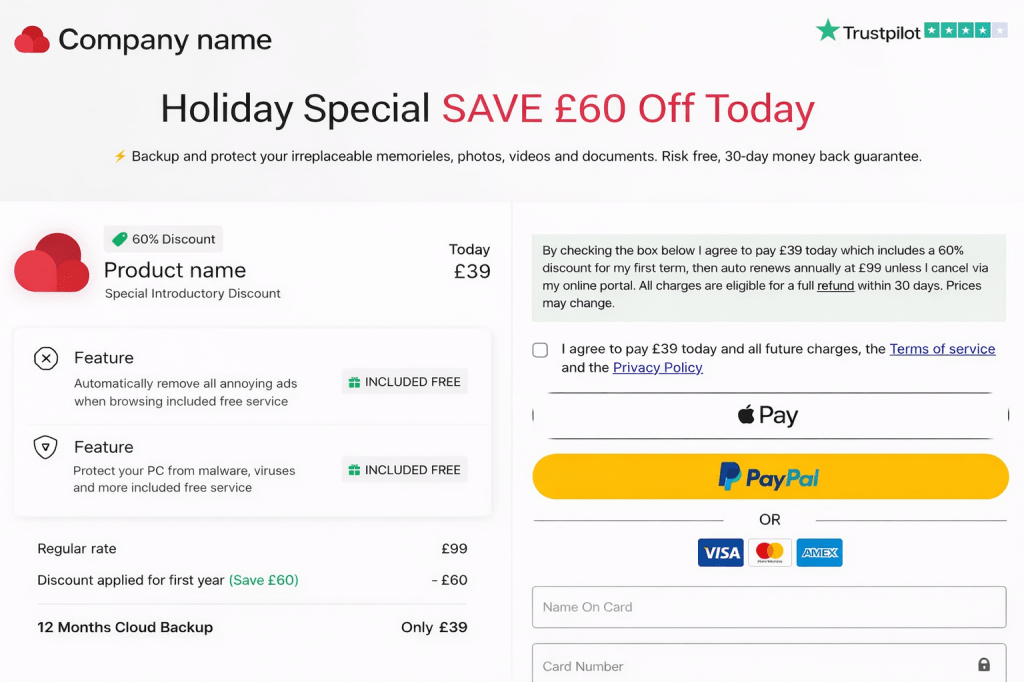
My mum sent me this screenshot of something she was trying to work out whether was genuine or not. I wasn’t quite sure what to tell her. It’s the sort of thing that before my brain injuries I could have handled quite well, but now it’s almost impossible for me to sort without help. I used strategy 150 (see below) to analyse the image and give me an answer. Here’s what it gave me …
You’re right to be wary. I wouldn’t call this an outright scam, but it does show several classic red flags that justify caution.
Here’s a clear, steady way to look at it.
Why your instincts are sensible
1. The headline is doing heavy emotional lifting
“Holiday Special – SAVE £60 Off Today” is designed to rush you. Urgency is a well-worn sales tactic, especially for subscriptions.
2. The real price is hidden in the small print
You’re paying £39 now, but the key line is this:
“then auto renews annually at £99 unless I cancel”
That’s not illegal, but it relies on people forgetting. Many do.
3. Bundled ‘free’ extras you may not want
Adblockers and antivirus software are presented as “included free”, yet:
Windows already has built-in antivirus Modern browsers already block many ads. These extras increase perceived value, not necessarily real value.
4. Trustpilot logos can be misleading
A Trustpilot badge doesn’t mean this offer is good — only that reviews exist. Some companies with aggressive billing still score reasonably well.
It may have – Confusing checkout flows Users not realising they signed up to recurring billing Cancellation being possible, but fiddly
Again: not illegal, but not scrupulous either.
The bottom line (plain English)
❌ Not a fake payment page ❌ Not identity theft ✅ Very likely to cost you £99 next year if you forget ✅ Designed to catch people out rather than serve them well
That’s why it feels like a scam — because it behaves like one, even if it stays just inside the rules.
A safer, traditional alternative
If what you want is simple, dependable backup (and I know reliability matters):
OneDrive (already built into Windows) iCloud (if you use Apple devices) Or a plain external hard drive, plugged in once a week — boring, old-fashioned, and dependable
Often the old ways are still the soundest.
My advice
If you’re hesitating now, don’t proceed. Legitimate, worthwhile services don’t need to rush you or hide the real cost in the margins.
If you’d like, I can:
Help you cancel safely if you’ve already gone part-way Suggest a calmer, clearer backup option that suits how you work Translate any other online “offers” you’re unsure about
You were right to stop and ask. That’s good judgment.
People often think fatigue is just another form of tiredness, but my experience has shown me how different they are. Tiredness is the ordinary, end-of-the-day feeling that settles after a period of effort and usually disappears with a good rest. Fatigue, on the other hand, has been a long-standing companion since my brain tumour treatment in 2008 and again after my stroke. My brain now works much harder behind the scenes to do everyday things — concentrating, navigating, seeing — and that hidden workload drains my energy far more sharply than seems obvious from the outside. Sleep doesn’t always put things right. Fatigue can arrive suddenly, linger stubbornly, and needs managing rather than simply ‘pushing through’. It’s not about attitude; it’s the reality of a brain that’s had to rebuild itself twice.
The Brainstrust charity does a great job on explaining fatigue for people with brain tumours here…
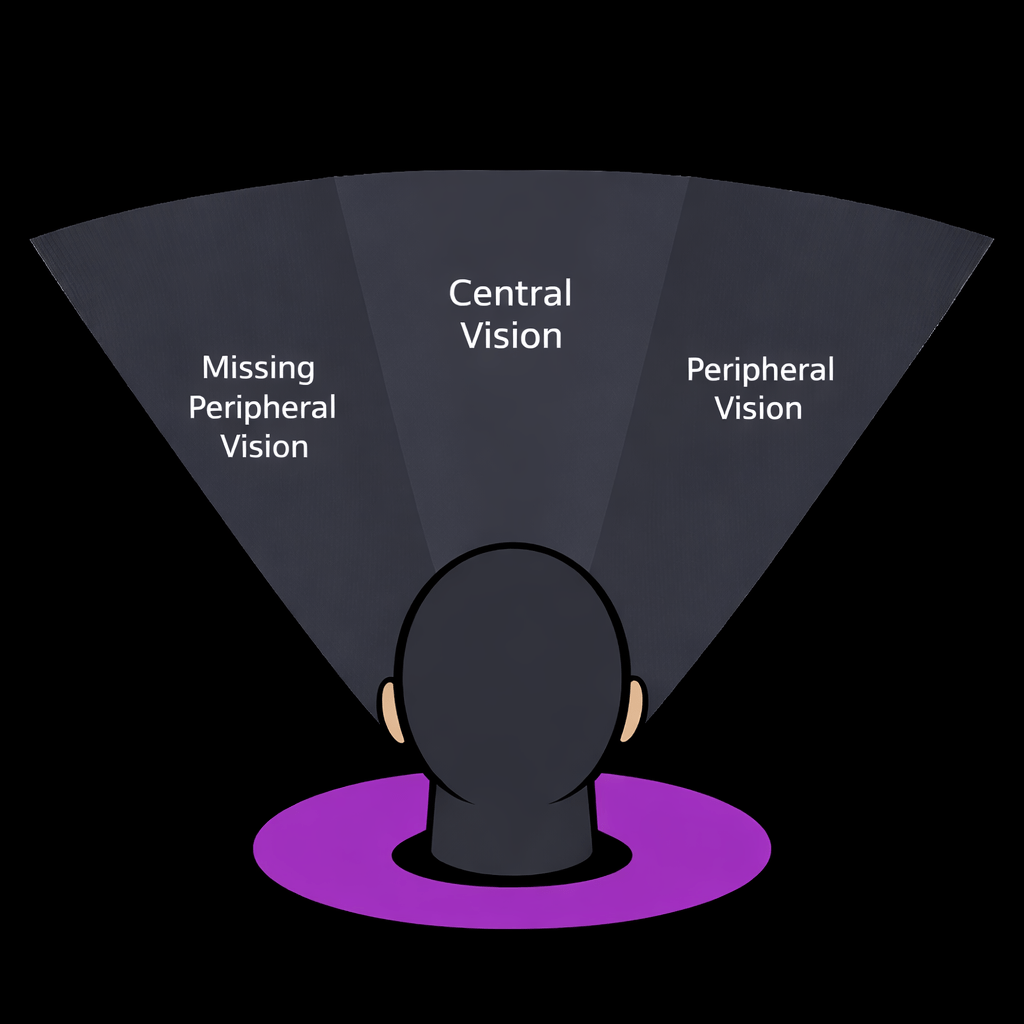
I have left-sided hemianopia (or Hemianopsia, which means I cannot see the left half of my visual field; true for both eyes. To a great extent I am unaware of the issue in for the most part daily life these days. There’s no additional edge or the like in what I see, it simply tails off into nothingness in the same way that a normally sighted person experiences. There’s just less information coming in.
Seventeen years ago, after surgery required sacrificing part of my vision, I would bump into people or objects on my left side almost daily. Although I rarely bump into things now, certain environments remain difficult to navigate.
In particular, walking through areas of medium crowd density is most challenging. When people have the space to move and change direction unexpectedly, it is very difficult for me to anticipate their movements on my blind side. Low crowd density situations pose fewer problems, and very crowded spaces can actually be easier to manage because movement is slower and more predictable.
 Half a Mind to ..