Half a Mind to ..

Life after brain injury – one small victory at a time.

Category: insight

  • Proprioception —The Hidden Sense (Insight 002)

    Proprioception —The Hidden Sense (Insight 002)

    Proprioception is the quiet, unnoticed sense that lets us navigate the world without watching our every move. It keeps us balanced, coordinated, and efficient. When it’s impaired, life becomes unexpectedly difficult.

    For example, a foot may land at an odd angle without warning. A hand may overshoot a mug or knock into objects. Even walking through a doorway can feel strangely misaligned. These experiences aren’t due to weakness—they’re due to missing or muddled signals from the body to the brain. A common thing for me is that one leg feels longer than the other; I’m not absolutely sure that this is due to poor proprioception, but it seems to me that it could be. 

    (more…)
  • Marginal gains (insight 021)

    Marginal gains (insight 021)

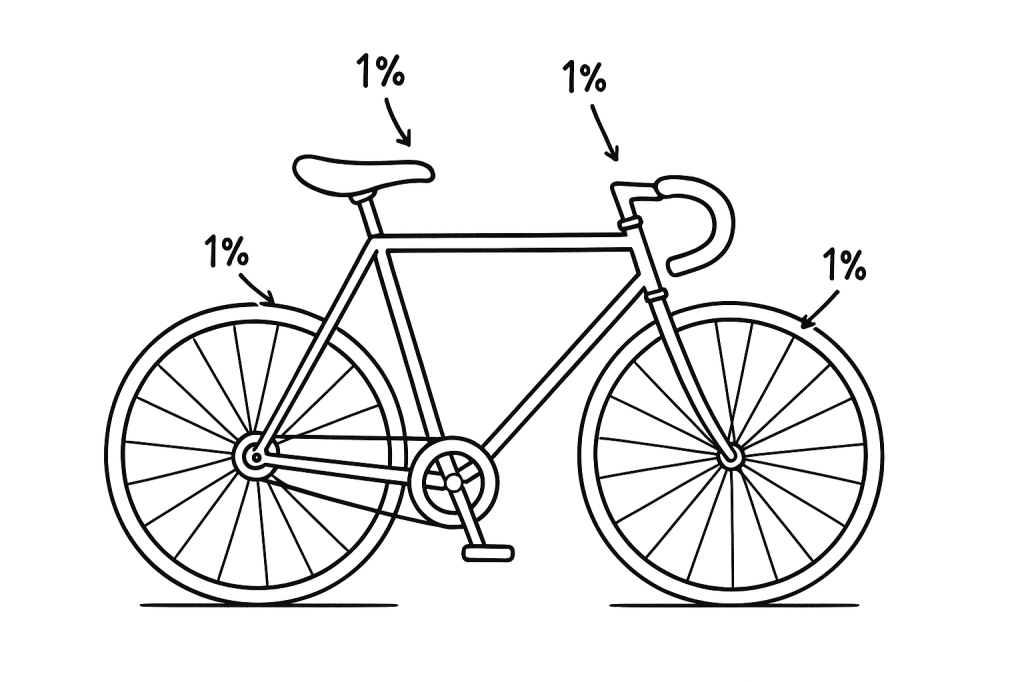
    Sir Dave Brailsford, the performance director who transformed British cycling, built his approach around the idea of “marginal gains” — the belief that improving many small things by just one percent can combine to create a dramatic overall improvement. The same principle applies here. My blog isn’t about grand, sweeping solutions, but about small, workable strategies for coping with the daily realities of life after brain injury. Each post offers a modest idea — perhaps trivial on its own — yet together they can make life that little bit easier, steadier, and more manageable over time.

  • A Healing Brain (Insight 018)

    A Healing Brain (Insight 018)

    My brain is in the process of healing and repurposing. For years, people believed that once the brain was damaged, that was that — a closed door, a full stop. But the truth, as we now know, is much more hopeful. The brain has a quiet talent for repair. Through neurogenesis (growing new nerve cells) and neuroplasticity (forming new connections), it can rewire itself — not perfectly, but well enough to find new ways of doing old things.

    After something like brain surgery or a stroke, this means recovery isn’t simply about waiting. The brain is busy listening, watching, and learning from whatever we do. Every attempt — whether it’s trying to take an even step or coaxing a stubborn hand into movement — sends a message. But beware the catch …

    (more…)