One of my hospital consultants once explained my condition to me in a way that, although difficult to hear, turned out to be unexpectedly helpful. That was in 2008.
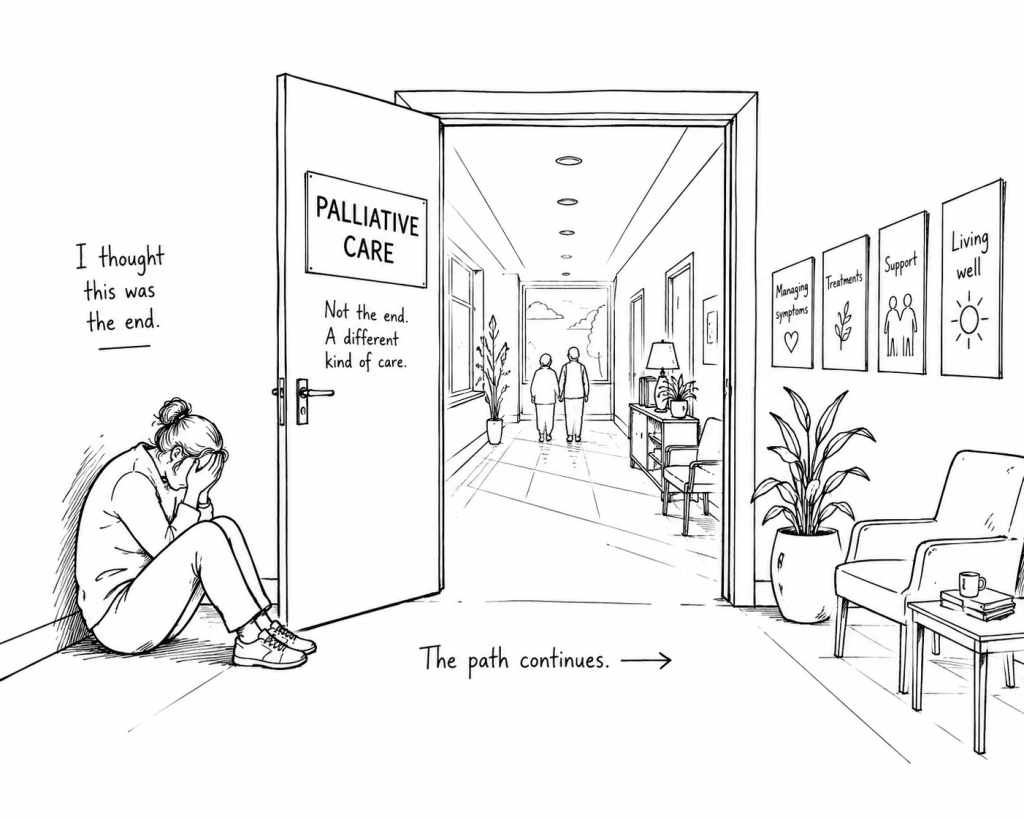
He told me that from that point onwards, all my care would technically be palliative. At first hearing, that sounds extraordinarily stark. The word carries enormous emotional weight. Many people hear it and understandably think it means that death is imminent, or that medicine has somehow “given up”.
What he carefully explained, however, was something rather different.
There was no cure for my condition. In that sense, the care was indeed palliative “by definition”. But that did not mean there was nothing left to be done. There were still treatments available that could address complications, manage symptoms, maintain quality of life, and potentially prolong life considerably.
Some time later, I witnessed a patient in tears because they had been told that their own care was palliative. The word itself seemed to have overwhelmed everything else. I remember thinking how differently the same information can land depending on how it is explained, and perhaps also on what assumptions we already carry into the conversation.
For many people, “palliative” sounds like a closing door. In reality, it can simply mean that the focus of care has changed. The aim may no longer be cure, but there can still be treatment, support, adaptation, and many years of meaningful life ahead.
I was also told at one stage that the median survival for my condition was four years. That number preyed heavily on my mind for a long time. I suspect this is another area where statistics can become emotionally complicated.
Statistics are useful for doctors and researchers looking at large groups of people. But when you are the patient sitting in the chair, it is very hard not to hear such numbers as if they are somehow a personal countdown timer.
Of course, they are not.
A median survival figure does not mean everybody dies at that point. Some may die sooner, some much later. It describes a population, not an individual destiny. Intellectually, I probably understood that at the time. Emotionally is another matter entirely.
Yet something rather human happened over the years. Life gradually reassembled itself around the diagnosis.
At first, the future can feel shortened and fragile. Every milestone acquires significance. Reaching four years mattered enormously to me. Then reaching six years mattered. But somewhere along the line, the constant mental countdown began to fade into the background. The diagnosis remained true, but it no longer occupied centre stage in my thoughts every day.
At one point, the specialist overseeing my care even remarked that, having already come this far, there was no particular reason why I could not continue living for a significantly long time — despite all my care still technically carrying the “palliative” label.
I think humans are remarkably adaptable creatures. We slowly construct a “new normal”, even around things we once thought unbearable. That adaptation is not denial, and it is not necessarily bravery either. It is simply part of how people continue living.
Looking back, I increasingly think the word “palliative” may sometimes do unintended damage when it is poorly explained or heard only through fear. For some people it sounds like the end of the story, when in reality it may simply describe a different chapter — one still containing treatment, routines, frustrations, pleasures, hopes, and ordinary life.


Leave a comment