Quick summary: A medication mistake revealed that my problem was not simply forgetting tablets. I was losing my place in the sequence. A new pill organiser, bought for travel convenience, unexpectedly offered a simple solution: raising the next compartment so the organiser remembers the process when my brain cannot.
I occasionally make mistakes with my medication.
Most of the time the errors are fairly mundane. I forget a dose, become uncertain whether I have already taken it, or lose track of which day of the week it is. What follows may not make much sense to someone without brain damage, but it probably needs to be understood in the context of my short-term memory loss, visual field defect, and tendency to absent-mindedly drop steps from a process.
This morning I made a different mistake.
I accidentally took my evening medication in the morning.
Fortunately, the consequences were not serious, but it left me with an awkward puzzle. Which tablets should I still take today? Which should be delayed? Which should be skipped altogether?
Working through the drugs’ dietary constraints and contraindications was more complicated than I was comfortable doing on my own, so I turned to AI to help me reason through the problem and develop a plan for the day.
The more interesting outcome, however, was not the solution to today’s mistake. It was what the mistake revealed about the underlying problem.
Until today I had been using a simple monochrome pill organiser. It worked reasonably well, but it did not eliminate medication mistakes.
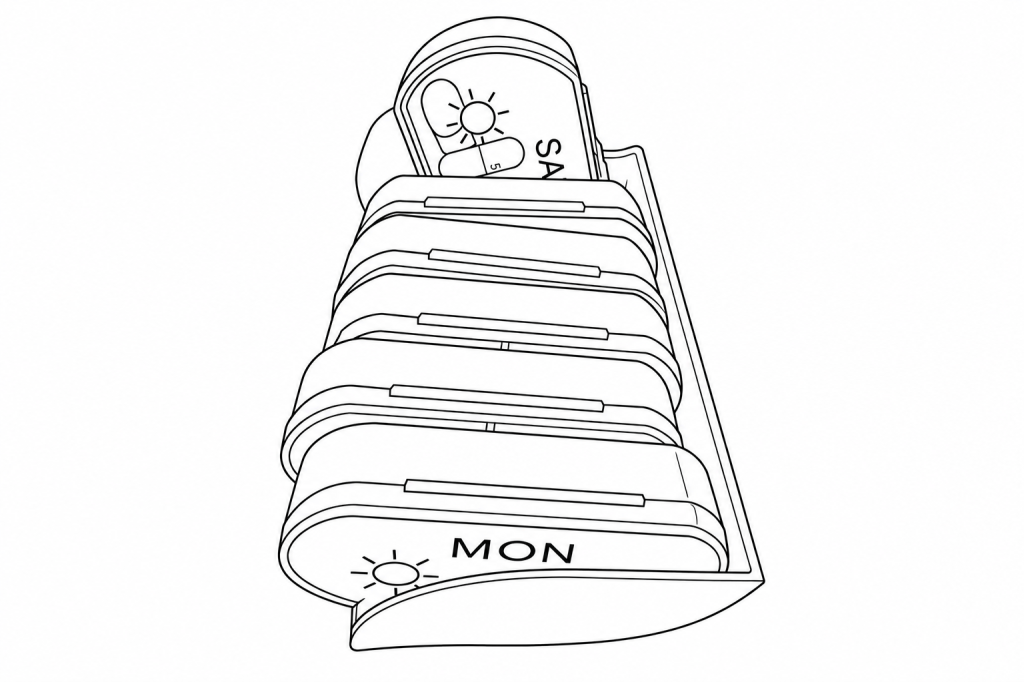
The colourful organiser shown in the photographs was purchased for a different reason. The colours were largely irrelevant to my decision. What attracted me were the removable daily pods. When travelling, I could take a day or two of medication with me rather than carrying the entire week’s supply.
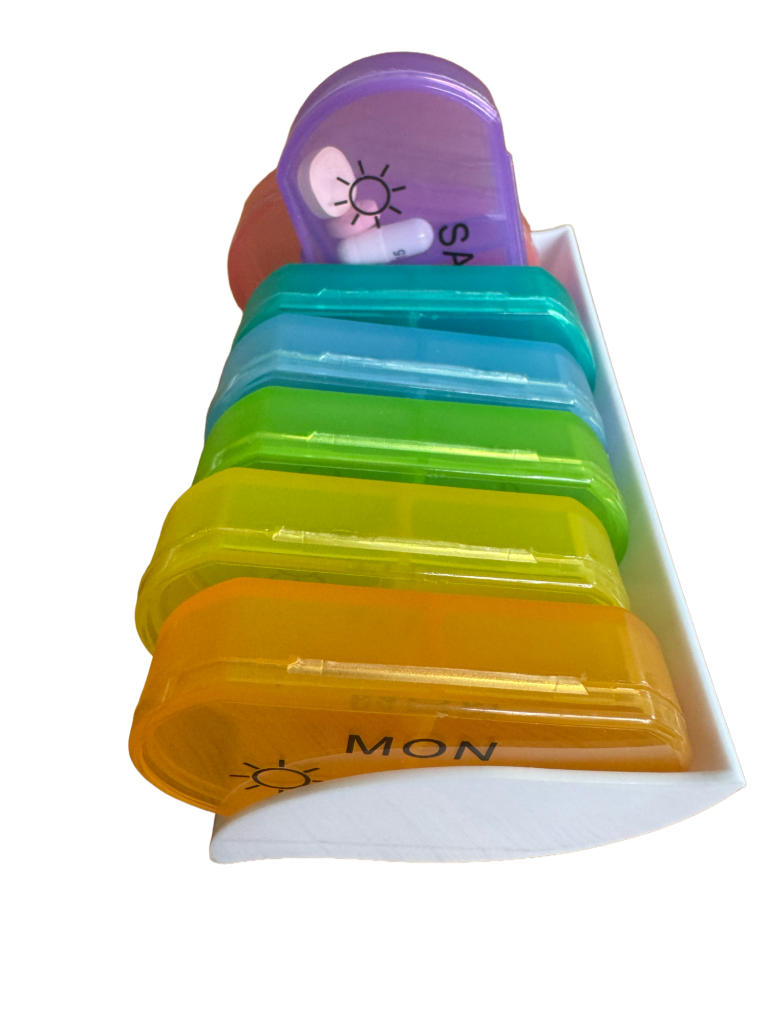
Only after this morning’s mistake did I realise that the removable pods offered another, much more interesting possibility. They allowed me to create a simple physical system that records where I am in the medication sequence.
In hindsight, the most valuable feature of the new organiser turned out not to be the reason I bought it.
I already have plenty of medication prompts. My organiser is divided into days and morning/evening compartments. My phone generates persistent reminders, sometimes using urgent notifications. I can log medication on my phone or watch, and my watch displays the current medication phase of the day.
In other words, I already have plenty of information.
Yet I still make mistakes.
The problem is that the organiser tells me what day each compartment represents, but not clearly where I am in the process.
The solution that occurred to me this morning is surprisingly simple.
I leave one end of one compartment slightly raised. It is a real eye-catcher when left in a prominent position.
The raised compartment does not represent the tablets I have just taken.
It represents the next tablets that I should take.
When it is time for medication, I remove the raised compartment and take the dose. I then return the compartment and raise the next appropriate one.
If I have just taken a morning dose, I raise the evening side.
If I have just taken an evening dose, I raise the following day’s morning compartment.
The organiser now always points to the next action.
Instead of asking myself:
“What day is it?”
or
“Have I already taken my tablets?”
I simply ask:
“Which compartment is raised?”
The answer tells me exactly what happens next.
A Small Change
What I like about this solution is that it does not require any new technology.
I have not bought a smarter organiser.
I have not installed another app.
I have not added more reminders.
I have simply changed the way the organiser stores information.
Previously it stored tablets.
Now it also stores my place in the sequence.
The organiser remembers where I am so that I do not have to.
That feels like another example of a marginal gain: a tiny adjustment that may prevent a surprising number of future mistakes.
Sometimes the most effective solutions are not about improving memory.
They are about finding ways to let the environment remember things on your behalf.


Leave a Reply